
Quality-Focused Ayurvedic Manufacturing for Responsible Brand Development
At Sansar Healthcare, we recognize that product quality is an essential consideration in Ayurvedic third party manufacturing. Our quality philosophy emphasizes suitable raw material specifications, defined manufacturing requirements, appropriate documentation, and careful product presentation.
We believe that a structured, quality-conscious approach can help businesses make informed decisions when developing Ayurvedic and herbal healthcare products.
Process Coordination
Product Documentation
Packaging Considerations
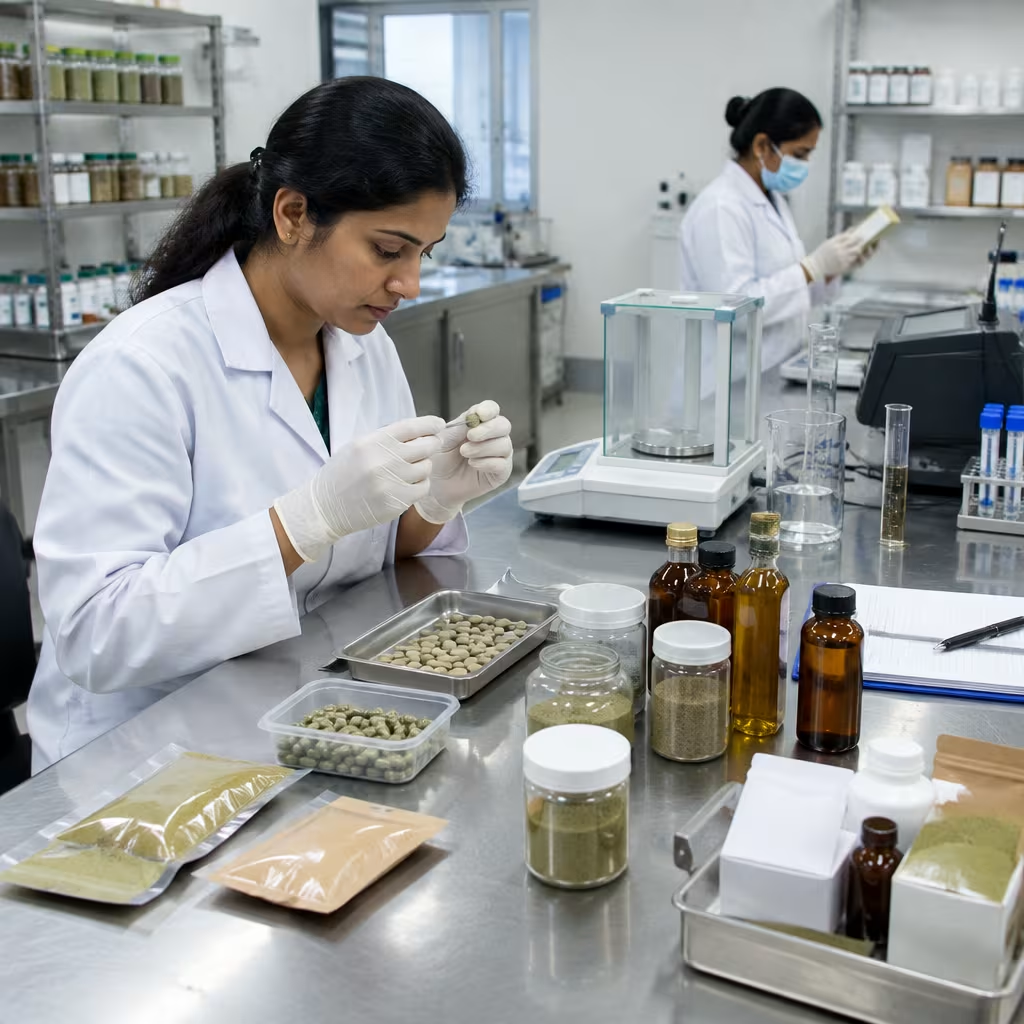
A Practical Approach to Ayurvedic Product Quality
Different Ayurvedic dosage forms require different considerations for ingredients, processing, testing, stability, packaging, and labelling. We encourage product-specific planning and appropriate verification rather than relying on a one-size-fits-all approach.
Ingredient Considerations
Herbal materials should be assessed according to relevant identity, quality, sourcing, and specification requirements for the proposed formulation.
Product Specifications
Clear product specifications help define formulation expectations, dosage forms, pack sizes, and relevant quality parameters.
Process Planning
Manufacturing requirements should be reviewed according to the product category, intended process, and applicable standards.
Documentation
Appropriate records and product documents help support traceability, review, and communication throughout the manufacturing project.
Packaging Suitability
Packaging selection should consider product characteristics, compatibility, storage requirements, and clear presentation of information.
Continuous Review
Feedback, process observations, and specification reviews can help identify opportunities for better manufacturing coordination.

Important Considerations Across the Product Lifecycle
Review Product Requirements
Understand the proposed product category, composition, dosage form, intended market, and applicable requirements.
Confirm Product Specifications
Define the formulation, ingredient criteria, packaging format, and relevant acceptance requirements.
Consider Appropriate Testing
Identify applicable testing, verification, and documentation needs based on the product and regulatory category.
Review Packaging & Labelling
Consider packaging compatibility, label particulars, and presentation before the product is released for sale.
Understanding Applicable Ayurvedic Manufacturing Requirements
Ayurvedic products in India may fall under different regulatory categories depending on their composition, intended use, claims, and presentation. Manufacturing licences, labelling requirements, quality standards, and documentation needs must be reviewed for the specific product and manufacturing arrangement.
Before placing an order, businesses should confirm the manufacturing location, relevant licences, product specifications, applicable testing requirements, and supporting documentation. Regulatory obligations should be evaluated with qualified professionals where necessary.
Sansar Healthcare encourages clear discussions about these requirements as part of responsible project planning.
Why Quality Planning Matters for Your Ayurvedic Brand
Quality-related problems can affect customer confidence, product consistency, distribution relationships, and long-term brand development. Establishing clear requirements before production helps reduce misunderstandings and creates a stronger basis for product review.
For businesses working with a third party manufacturer, communication about specifications, testing, documentation, and packaging is particularly important. These considerations should be discussed as part of the manufacturing agreement.
Our Quality Principle
Clear requirements, responsible coordination, appropriate verification, and continuous improvement support stronger manufacturing partnerships.